Ribera del Duero: A region at a crossroads
Updated: May 10
Between the weight of a changing market and the promise of extraordinary terroir, one of Spain’s most storied appellations is rediscovering its oldest truth.
By Tony Lécuroux, Master Sommelier — 2nd Best Sommelier of Switzerland 2025
Wine region Analyses - April 2026
The Industry Is Under Pressure. This Is Not a Crisis. It Is a Reset.
Something fundamental has shifted in how the world drinks wine. Not suddenly, but gradually. It is no surprise that global consumption is declining.
Younger generations are drinking less, or not at all. The current 2026 geopolitical situation has shortened trade and opportunities.
The European market is clearly moving toward lighter reds, lower alcohol, more juicy fruit, less heavy tannins, and a gentler texture overall.

And across all categories, it is white and rosé wine that show consistent growth year after year, the only styles moving reliably upward in an otherwise contracting landscape.
The model that built the international reputation of many European appellations was power, oak, concentration, and scores. This is evolving.
This is not a crisis. It is the natural movement of markets, cyclical as they have always been.
And for regions with exceptional raw material, it is an exceptional opportunity to show more of what they actually are.
The fine wine segment, wines with genuine identity, a compelling story, and authentic terroir, is holding. Collectors and sommeliers in Switzerland, the UK, Scandinavia and across Asia are not buying less. They are buying more selectively. Moving towards tension over extraction, place over technique, longevity over immediate impact.
Ribera del Duero has exceptional raw material. The moment to show the full breadth of it is now.
A Region of Two Voices: A Richness, Not a Division
Standing in the cellars of Ribera del Duero this April 2026, I have tasted hundreds of wines, from crisp white to powerful rosé and dense red, with anything in between.
Talking with winemakers whose families have worked the same soils for three and four generations, what struck me most was not contradiction but the depth of history. This is a region capable of speaking in more than one register. That is a strength that few appellations can claim.
On one side, the Ribera the world already knows and respects: powerful, structured, age-worthy Tempranillo that built the appellation’s international standing from its founding in 1982. This is the identity that opened doors in every major fine wine market in the world. It remains highly relevant, and the collectors who love it are not going anywhere.
On the other hand, something older and quieter that is now receiving the attention it deserves: villages at altitude on soils where the oldest Tempranillo vines in Europe have survived untouched. The traditional co-fermentation processes with the white grape Albillo Mayor. Winemakers work with individual parcels with sharp precision. These wines have the taste of geology, their place, with some beautiful hillsides or a particular clay soil in Soria. Wines that speak directly to where the fine wine collectors and professionals are heading.
Estates like Dominio de Atauta, Dominio de Es, and Dominio del Pidio are not outliers. They are evidence that this appellation’s depth has always been there. Just waiting for the market to be ready to hear it. I believe this moment has arrived.
The Land: Altitude, Soil, and a Climate Like No Other

To understand what makes Ribera del Duero’s finest wines genuinely exceptional, you have to start with geography. The Duero plateau stretches across the provinces of Burgos, Soria, and Segovia. You will find an elevated, inland mass sitting between 750 and 950 metres above sea level across most of the appellation. In the highest-altitude sites, the vineyards reach 1,100 metres. These are among the most extreme growing conditions for fine wine anywhere in Europe.
The soils are as important as the altitude, and as varied. In the southern part of the valley, you find pure white chalk and calcareous limestone: poor, well-drained soils that force the vine roots deep down, limit yields naturally, and produce wines of tension and mineral clarity. In the north, the soils shift to poor red clay, giving a completely different identity. Wines of more structure, more body, a different texture entirely. This contrast across a single appellation is not a complication. It is a richness that most wine regions in the world would envy.
Then there is the climate. Continental and extreme in every sense. Winters here are severe. In 2021, temperatures dropped to minus 20 degrees Celsius. Summers regularly push past 40 degrees for days at a time. And the diurnal shift, the swing from daytime heat to cool nights, routinely reaches 20 degrees Celsius or more within a single day. These conditions force the vine to work. They produce grapes with exceptional concentration, genuine acidity, thick skins from the intensity of UV radiation at altitude, and a structural tension that no amount of winemaking technique can fabricate.
What Ribera del Duero actually was: A History Written in Clarete
To understand where this appellation is going, it helps to understand where it began, and how rich that origin is.
The Clarete did not disappear. It [...] it is the appellation's most compelling new story
The Duero plateau is, and has always been, a place of character. Isolated by mountains, shaped by an extreme climate, the villages of Burgos, Soria, and Segovia developed a viticultural identity entirely their own. The vineyards planted here more than a hundred years ago were not planted for commerce. They were planted because the families who worked this land needed something to drink. Wine was the daily staple. Made at home, consumed at home, shared with neighbours. And the wine these families made was not the dark, extracted, oak-aged Reserva that later defined the appellation’s international reputation.

It was Clarete, a light red, somewhere between a deep rosé and a pale red, produced by co-fermenting white and red grapes together from the same plot. Albillo Mayor alongside Tempranillo. Bobal, Garnacha, and other varieties interplanted in the same field, harvested together, vinified together, aged together. The result was a wine built for daily drinking: fresh, aromatic, expressive of place.
This tradition gradually gave way as the appellation’s commercial identity evolved.
First, when French Bordeaux négociants sourced wines during the phylloxera crisis of the late 1880s sought darker, more concentrated styles to fill up their tanks. Spanish wines were the easiest answer to that crisis.
And then, decisively, when the Consejo Regulador launched the D.O. in 1982. What followed was one of the most remarkable commercial successes in European wine history: from 10 founding bodegas to 316 by 2025, with international recognition, critical acclaim, and a global presence built on the strength of the appellation’s powerful reds.
With the current evolution of the global market, consumers are eager to drink lighter wines, with less alcohol and more affordable. These Clarete echoes that movement. It is the right time to unveil them to the world, as a lighter red, to be served cooler.
Albillo Mayor: Six Years of Work, One Historic Recognition
Albillo Mayor is the indigenous white grape of Ribera del Duero. Albillo Mayor is grown almost exclusively within this DO. It is deeply rooted here, present in the region’s old field-blend vineyards for centuries, co-planted with Tempranillo in the old Clarete tradition.
The 2019 Consejo's decision to recognise white wines under the Ribera del Duero D.O. was the result of six years of sustained collaboration between progressive producers and the regulatory body.
At a time when figures for white wine are rising everywhere while red wine has been declining regularly for a decade, this decision reflects the Ribera del Duero Consejo's interest in being forward-thinking and responsive to its consumers.
From an international perspective, this was both courageous and well-timed.
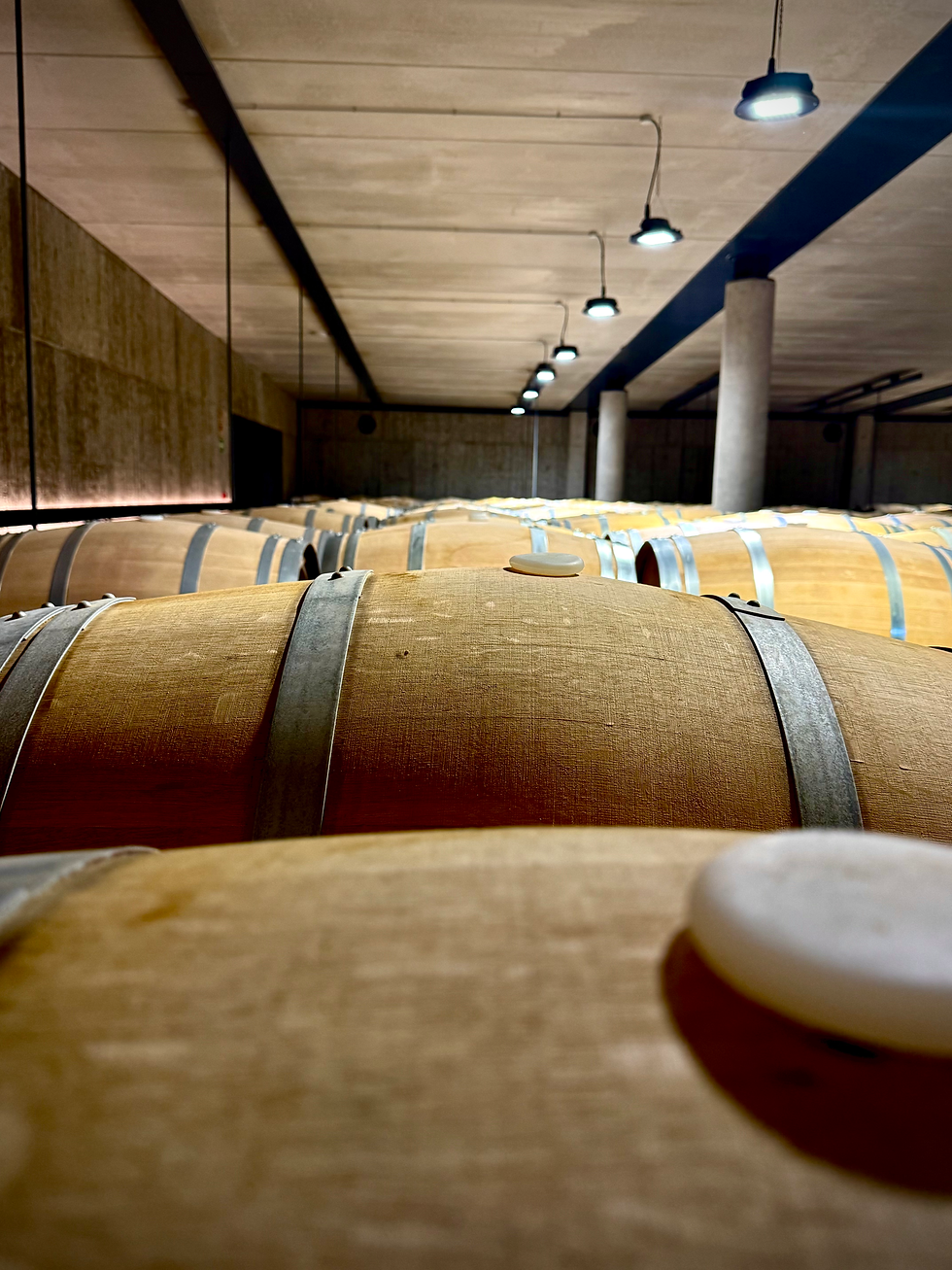
The agronomic logic is compelling. As climate change pushes ripeness earlier and increases pH levels in Tempranillo, Albillo Mayor, with its naturally lower pH and high acidity, provides both a blending solution in co-fermented reds and a standalone white wine with strong market differentiation.
Stylistically, Albillo Mayor is a white grape with a moderate aromatic component. However, it shows texture, volume, a light phenolic bitterness, a delicate affinity with noble oxidation and a great potential to remain balanced in such a hot and dry climate.
From my experience, I would recommend that winemakers focus on the gastronomic version of this white grape. Because of the delicate flavour profile of Albillo, I do not see this variety on the same market opportunities as the already well-established Albariño or Rueda.
However, I had some outstanding examples of Albillo Mayor during my last trip, with some short skin maceration, oak-aged, amphorae... There is a full mosaic of opportunities living there. I would compare it to some white from the Rhone Valley based on Marsanne.
This would give a real sense of place, with almost nothing else like it in Spain,
The Genetic Treasure: Old Vines, Ancient Clones, and Irreplaceable Material
One of the most remarkable characteristics of Ribera del Duero, and one that deserves far greater visibility in international fine wine circles, is the extraordinary diversity of its Tempranillo genetic material.
Scientists and viticulturalists working in the region have now identified more than 120 distinct Tempranillo clones within the appellation. This is an extraordinary number. It is the direct result of the region’s historic character: These
vineyards were never subjected to the mass clonal selection and replanting that homogenised so many European appellations during the 20th century. Each village, each plot, each family preserved its own selection over generations. The result is a genetic archive of incalculable value. One that underpins the appellation’s long-term potential for quality and diversity.
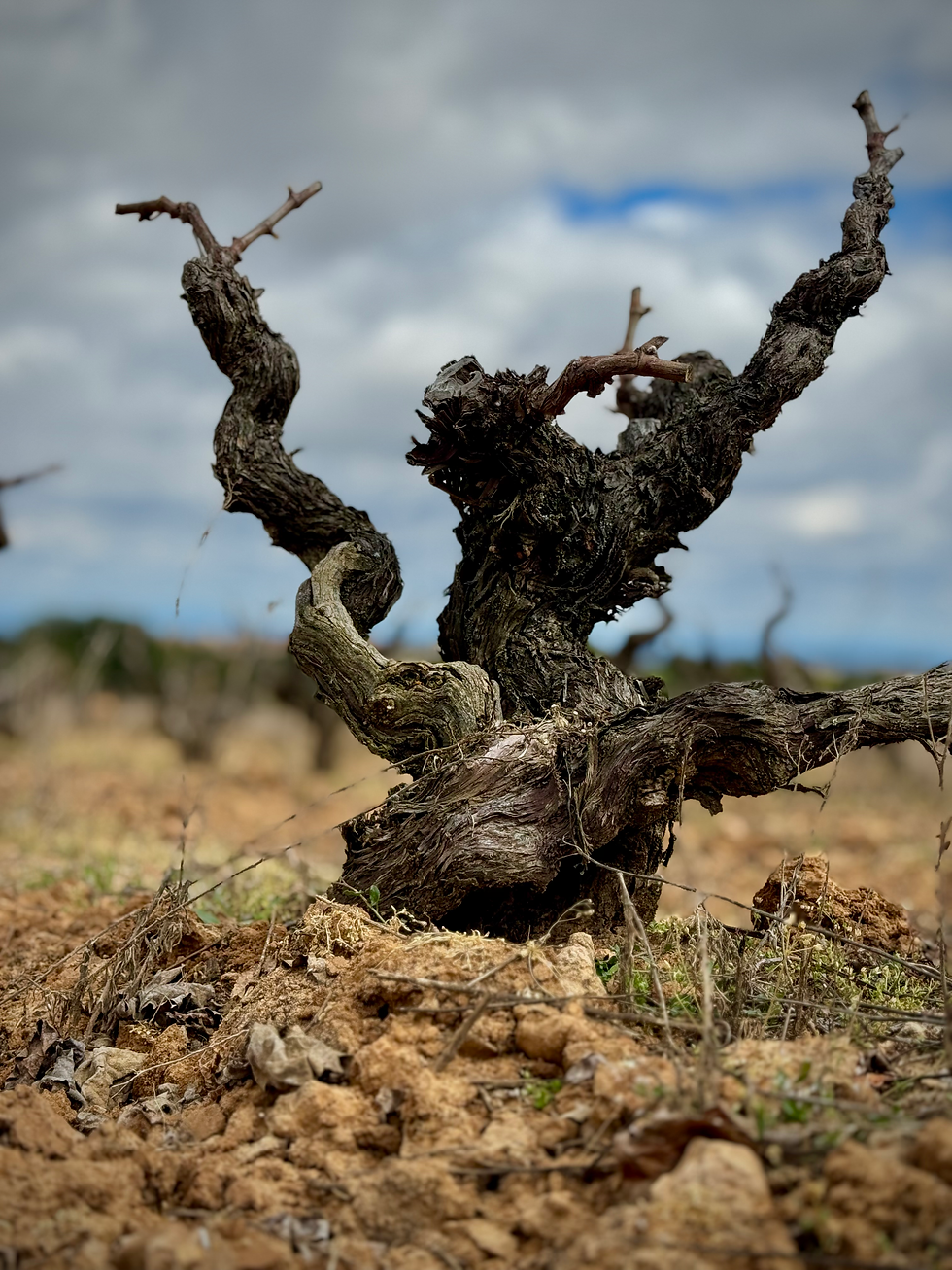
The persistence of pre-phylloxera vines across the appellation is a testament to both the region’s geology and its resilience.
Selection of pre-phylloxeric old vines in the Ribera del Duero
These old vineyards produce very little. Yields for these centenarian vines average between 2,500 and 4,000 kilograms per hectare, well below the D.O.’s permitted maximum. In the oldest parcels, the figure is often lower. But the concentration, the skin thickness, and the complexity of flavour that result from such low yields, combined with the altitude and UV intensity of the plateau, are unlike anything achievable in higher-yielding sites.
The extreme beauty of these vineyards is watched out daily by passionate winemakers, where their souls go into the vineyard. In fact, I can mention Dominio del Pidio, Dominio de Atauta, Dominio de Es, the 1076 project, and many more.
The common point to all of them is their unstoppable dedication to the land, and the respect they have for the previous generations that have planted these vineyards. They respect it all and don't expect to build an overly extracted wine to win a gold medal.
They extract the natural concentration of the grape very gently, play softly in the cellar, use oak barrels as support, not as marketing makeup protection, and let the wine mature and find its own way.
Knowing how rare it is to allow a wine to age this long, nowadays, I have so much respect for these artists and artisans of the wine industry.
The persistence of pre-phylloxera vines across the appellation is a testament to both the region’s geology and its resilience. In the sandy soils of certain villages in the Soria sector, the louse could not establish itself. In other parts, ungrafted vines survived in red clay and limestone, protected by the extreme dryness and harshness of the plateau. Being a remote region, it has remained historically self-sufficient for a long period. Today, there are still several hundred hectares of pre-phylloxera vines within the appellation. They are concentrated in the highest-altitude sites, where the combination of age, elevation, and extreme growing conditions produces wines of remarkable balance: rich and structured, but never heavy or tannic; concentrated with a freshness and elegance that only the diurnal range makes possible.
The Opportunities Ahead
The opportunity is not to choose between these directions. It is to present both with equal pride and clarity
The global fine wine market is in a moment of reorientation. And Ribera del Duero is, in my view, exceptionally well-positioned to benefit from it.
The appellation holds everything the current market is searching for. Genuine terroir diversity across two distinct soil types. An extreme continental climate that produces wines of natural tension and longevity. A viticultural history that predates the modern wine trade and carries a Clarete tradition now perfectly aligned with the European trend toward lighter, fresher, more approachable reds. A white wine category in Albillo Mayor that is truly unique.
There are also markets, in Asia, in the United States, in the Gulf, that continue to seek the structured, powerful, age-worthy reds that Ribera del Duero has always excelled at producing. These markets are not going away. The extraordinary raw material of this plateau, expressed through its most serious traditional reds, remains as compelling as it has ever been. Even so, these richer traditional wines have never been as precise as it is today.
The opportunity is not to choose between these directions. It is to present both with equal pride and clarity: the ancient lightness of the Clarete tradition alongside the structured depth of the plateau’s finest reds. This is not a contradiction. It is the full identity of Ribera del Duero, and it is a story the international fine wine world is genuinely ready to hear.
What I Tasted. What I Believe.
I have tasted a great deal of wine in a great many places. What I tasted in Ribera del Duero this April stayed with me.
Not because everything was perfect, no appellation is. But because beneath the commercial pressures and the market questions, there is something here that cannot be manufactured.
The soils. The altitude. The vines that have been growing in the same plots for over a century, through wars and market collapses and boom years, tended by families who simply needed something to drink. That continuity is not a marketing story. It is physical, it is genetic, and it is genuinely rare.
The Clarete is not a new wine. It is the rebirth of the oldest wine this region has ever made, and it arrives at exactly the right moment.
The Albillo Mayor white is not a trend. It is a native grape finally receiving the recognition it earned. And the ancient Tempranillo vines of the plateau, with their 120 known clones and their fractional yields, represent a genetic heritage that no investment, however large, can replicate elsewhere.
Ribera del Duero does not need to reinvent itself. It needs to share, with confidence and depth, what it has always been. The world, right now, is ready to listen.
Want to explore the world of fine wine with genuine expertise?
At Paroles de Vins, I offer private wine consulting, curated tastings, and exclusive wine experiences for collectors, investors, and hospitality professionals who demand more than a label.
→ Visit parolesdevins.com to discover our services → Follow @parolesdevins on Instagram for field dispatches from the world's great wine regions → Contact: info@parolesdevins.com |
About the Author
Tony Lécuroux MS
Tony Lécuroux is a Master Sommelier, one of fewer than 300 in the world to hold this distinction, and the 2nd Best Sommelier of Switzerland 2025.
He is the founder of Paroles de Vins, a wine education, events, and concierge company based in Switzerland, and a certified lecturer of Wine Education Switzerland, delivering ISG certification programmes across the country.
Having spent a decade working in Michelin-starred restaurants across England and Switzerland, Tony now works with private clients, estates, and hospitality groups across Europe and beyond.
He grew up near Hermitage in the Northern Rhône Valley, a place that continues to shape his understanding of what wine, at its best, can be.
This article reflects Tony's personal vision and field experience, and does not represent the position of any commercial partner or institution.


Comments