
Sherry: Beyond Sweet Expectations - Discovering Spain's Dry, Saline Masterpieces
- Tony Lcrx
- Aug 25, 2025
- 7 min read
Updated: Jan 16

Most wine lovers skip Sherry entirely—yet it remains one of Europe's most technically sophisticated and historically significant wine regions. Here's my insight to introduce you to these hidden gems.
Why Sherry Matters Now
While Burgundy prices soar and Champagne allocations shrink, serious collectors are quietly building Sherry cellars. This isn't nostalgia—it's recognition. Sherry offers complexity that rivals any great wine region, prices that make sense, and a production system so sophisticated it took centuries to perfect.
The numbers tell the story: despite millennia of refinement, global Sherry consumption remains remarkably low. For the wine professional, this represents an opportunity. For the enthusiast, it means access to world-class wines without the hype tax.
The Terroir Advantage: Albariza Soil
The terroir is legitimate, the expression is clear, and the results speak for themselves

Jerez sits on albariza—a white chalky marl that functions like nature's irrigation system. During winter rains, it absorbs water like a sponge. In summer heat (often exceeding 40°C), it forms a protective crust that slowly releases moisture to vine roots below.
This isn't just interesting geology—it's practical winemaking. The high limestone content naturally regulates pH while creating the mineral backbone that defines great Sherry. Add Atlantic proximity, and you get the humidity that makes flor yeast possible, then you'll understand why Sherry deserves respect. The terroir is legitimate, the expression is clear, and the results speak for themselves.
Palomino Fino: The Perfect Workhorse

Palomino Fino represents 98% of Jerez plantings for good reason. It's neutral, high-yielding, and perfectly adapted to the hot climate. Critics call it boring—they're missing the point.
Palomino's neutrality is its strength. It doesn't compete with terroir expression or mask the flor's work. Instead, it provides a clean canvas for the region's real stars: the soil, the climate, and the biological processes that transform ordinary wine into something extraordinary.
Think of it as wine's equivalent to a perfect white dress shirt—unremarkable alone, essential in context.
The Innovation Story: Ancient Grapes Return
Here's where Sherry gets interesting for modern wine professionals. In 2022, the Consejo Regulador authorised pre-phylloxera varieties: Vejeriego, Perruno, and Beba. These aren't marketing gimmicks—they're climate adaptation tools.
These forgotten grapes offer extended growing seasons and naturally lower alcohol potential. Producers like Ramiro Ibáñez and Willy Pérez are creating experimental unfortified styles that maintain Sherry's character while addressing modern challenges.
The regulation also eliminated mandatory fortification for Fino and Manzanilla, provided they reach 15% ABV naturally. This preserves wine integrity while adapting to warmer vintages that produce riper fruit.
The Solera System: Perpetual Ageing in Motion

The solera system isn't just traditional—it's a brilliant business strategy. By blending multiple vintages through a tiered system, producers ensure a consistent style while building complexity that single vintages can't match.
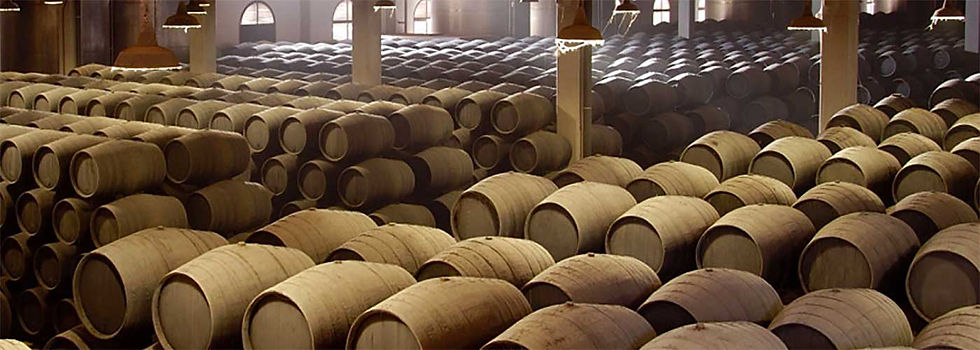
Here's the fascinating reality: no barrel is ever completely emptied. Picture this: in González Byass's oldest soleras, some barrels contain wine that traces back to the 1840s—not as museum pieces, but as living, breathing components of every bottle produced today.
The process works like this: Young wine enters the top tier (criaderas), typically 3-4 levels high. Each year, producers draw only about one-third of the wine from the bottom level (solera) for bottling. That space is refilled from the level above, which is topped up from the next level, and so on. Fresh wine only enters at the very top.
The mathematical magic: Because you never extract more than a third, theoretically, some original wine remains forever. After 10 years of this process, roughly 1.7% of the original wine persists. After 20 years? Still 0.03%. This means every glass of aged Sherry contains molecular traces of wines from decades past.

Why this matters: The older wine "educates" the younger, stabilising flavours, while the younger wine provides fresh nutrients to keep the flor yeast alive. It's a self-sustaining system where time becomes an ingredient—each bottle represents not just this year's harvest, but the accumulated wisdom of every vintage that preceded it.
This is ageing without end, quality through perpetual motion. Your glass of Tío Pepe isn't just wine— it's liquid history that never stops evolving.
Understanding Flor: The Biological Edge

Flor yeast is Sherry's secret weapon—but only for the dry styles. This living veil forms naturally on Fino and Manzanilla wines in partially filled barrels, creating the pale, bone-dry Sherries that define biological ageing.
The process demands precision: 15-15.4% ABV, specific humidity levels, and temperature control. Here's where Atlantic winds become crucial—the humid Poniente from the west provides the moisture the flor needs to thrive, while the dry Levante from the southeast helps regulate the cellar environment.
Manzanilla's coastal advantage: Produced exclusively in Sanlúcar de Barrameda, directly on the Atlantic coast, Manzanilla benefits from constant ocean influence. The sea air creates higher humidity and more stable temperatures than inland Jerez, producing a more persistent flor veil. This results in Manzanilla's characteristic saline edge—that distinctive sea-spray finish that sets it apart from inland Finos.
Flor metabolises alcohol, acids, and glycerol while producing acetaldehyde—the compound responsible for Sherry's distinctive nutty, yeasty character. It prevents oxidation, keeping wines pale and fresh rather than brown and heavy.
The biological ageing process creates wines of remarkable complexity through controlled interaction between wine, yeast, oxygen, and Atlantic climate. Modern winemaking can replicate many processes, but this marriage of flor and maritime terroir remains uniquely Sherry's achievement.
Climate Challenges: The 2022 Revolution
Climate change threatens Sherry's delicate biological ageing. Excessive heat could kill flor yeast, destroying the process that defines the region's finest wines. The response has been measured and intelligent.
The 2022 Regulatory Revolution: In a landmark decision, the Consejo Regulador eliminated mandatory fortification for Fino and Manzanilla styles. Why? Global warming now produces grapes that naturally reach 15% ABV—the exact level needed for flor development. This isn't just adaptation; it's preservation of authenticity. Unfortified Sherries maintain purity without the dilution that added spirits can create. They are now able to better focus than ever onto terroir, single vineyards as well as authenticity, showing a bright future.
Forgotten Varieties Return: The same 2022 reform authorised pre-phylloxera grapes: Beba, Vijiriego (Vejeriego), and Perruno. These aren't novelty acts—they're climate solutions. These varieties ripen later than Palomino, extending the growing season and naturally producing lower alcohol levels. Early trials show they create linear, more elegant wines while maintaining Sherry's essential character.
Expanding permitted vineyard zones and climate-controlled ageing facilities round out the strategy. This isn't panic—it's proactive adaptation by a region that understands its strengths and vulnerabilities while refusing to compromise its soul.
The Sherry Style Spectrum
Understanding Sherry means knowing its diversity. Each style represents a different approach to ageing and fortification:
Manzanilla (15-15.5% ABV): Exclusively from coastal Sanlúcar de Barrameda vineyards. ➡️ Biological ageing under flor with constant Atlantic influence creates bone-dry wines with distinctive salinity and delicate almond notes.
Fino (15-15.5% ABV): Inland biological ageing under flor. ➡️ Drier climate than Manzanilla produces a slightly nuttier character while maintaining the crisp, pale profile that defines biological ageing.
Fino Pasada/Manzanilla Pasada (15-17% ABV): Extended biological ageing where flor naturally weakens over time, allowing controlled oxidation. ➡️ These "in-between" styles offer complexity of both biological and oxidative characters.
Amontillado (16-22% ABV): Begins under flor, then continues ageing oxidatively after fortification kills the yeast. ➡️ Amber-colored with nutty, savoury complexity—the perfect bridge between fresh and aged styles.
Palo Cortado (17-22% ABV): The mysterious style that begins like Amontillado but develops oxidative character resembling Oloroso. ➡️ Rare and prized for its unique aromatic complexity that combines finesse with power.
Oloroso (17-22% ABV): Pure oxidative ageing from the start—no flor protection. ➡️ Fortified to 17% ABV immediately, these dark, rich wines develop intense walnut and raisin character through decades of controlled exposure to oxygen.
Each represents centuries of refinement, as well as different expressions of the same fundamental terroir, shaped by both human intervention and natural processes.
The Investment Case
For wine investors, Sherry offers compelling value. Aged expressions command respect among professionals while remaining accessible to serious collectors. The solera system means consistent quality, while limited production ensures long-term interest.
Recent auction results show growing appreciation for top-tier Sherries, particularly aged Amontillados and single-cask bottlings. The smart money recognises quality before the market corrects pricing.
Food Pairing Excellence
Sherry's diversity makes it exceptionally food-friendly:
Fino/Manzanilla: Oysters, jamón ibérico, almonds, dry cheeses
Amontillado: Roasted chicken, aged cheeses, mushroom dishes
Oloroso: Game meats, rich stews, dark chocolate
Pedro Ximénez: Vanilla ice cream, blue cheese, dried fruits, blue cheeses
The range covers aperitif through dessert, making Sherry useful for serious entertaining and restaurant wine programs.
Ready to explore Sherry seriously? This region rewards study, patience, and an open mind. The wines offer complexity that rivals any great region, history that spans millennia, and value that makes sense in today's inflated wine market.
As a Master Sommelier with over a decade in luxury hospitality, I've watched wine trends come and go. Sherry isn't trending—it's enduring. That's exactly why it deserves your attention.
About the Author
I'm Tony Lécuroux MS, a wine professional and founder of Paroles de Vins — a luxury wine concierge service for discerning collectors and enthusiasts.
After years of managing wine programs in Michelin-starred restaurants, I help clients discover exceptional wines that offer both pleasure and value.
Connect with me for personalised wine consulting and cellar building, to discover my personal favourites. Thanks to my years of wine tastings, I can craft and build experiences, cellar selection, and consulting for your individual case.
Because great wine isn't about following trends—it's about understanding story, sharing and experiencing, I will have a personalised offer only for you.
🌐 Website: https://www.parolesdevins.com
📧 Email: info@parolesdevins.com
📱 Instagram: @tony_lcrx_ms


Comments